
Sereia: The Power Behind the Mermaid
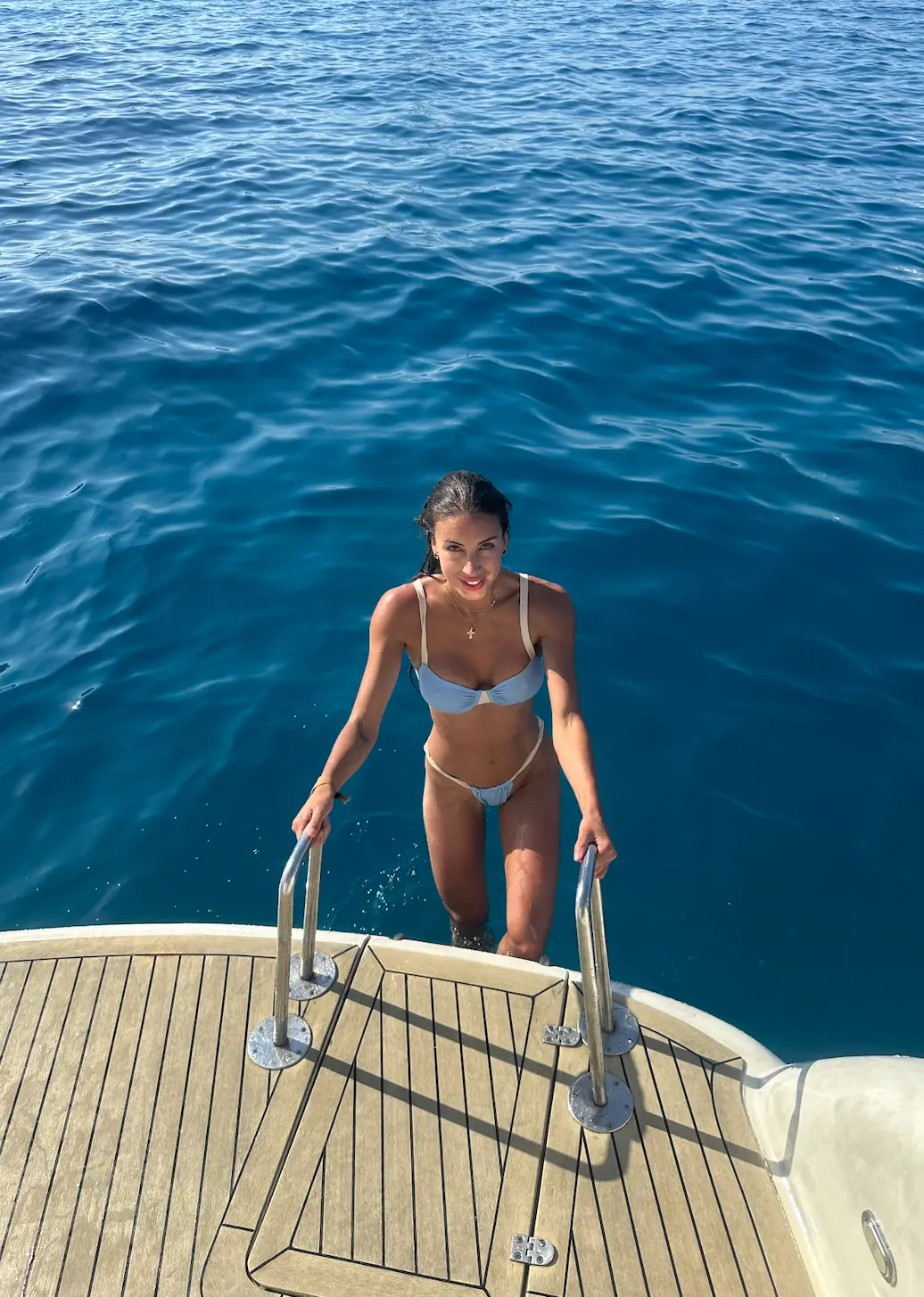
The Names Behind the Bikinis
Every Yaropa piece carries a name with a story behind it.
Not as an afterthought or simply a label, but as part of the world we build around each design. A name can hold a place, a feeling, a memory, a woman or an entire piece of culture.
So I wanted to start telling the stories behind them.
When I chose the name for the Sereia Bikini, I wasn’t thinking about the fairytale version of a mermaid waiting to be rescued or admired.
I was drawn to something much more powerful.
A woman belonging to the water. Magnetic without asking for attention. Sensual without performing for anyone. Feminine, but never fragile.
The deeper I looked into the stories behind the sereia, the more interesting she became.
Because the mermaid we recognize today isn’t really one story at all.
She’s the result of centuries of mythology, migration, religion and imagination and in Brazil, those worlds meet in particularly fascinating ways.
Before the Mermaid Had a Tail
The idea of a beautiful, dangerous feminine creature connected to water is much older than the mermaid we picture today.
Even the sirens of ancient Greek mythology weren’t originally the half-woman, half-fish creatures we now associate with the word. Early sirens were represented with female and bird-like forms. The familiar fish-tailed image developed much later, becoming established through medieval European imagery.
But something remained remarkably consistent.
The voice.
The attraction.
The danger of being unable to look or turn away.
For centuries, stories about sirens and mermaids have carried an uncomfortable combination of qualities that women were not always encouraged to possess at the same time:
Beauty and power.
Sensuality and independence.
Softness and danger.
The mermaid doesn’t conquer through physical force.
Her presence is the force.
And perhaps that’s part of the reason we are still fascinated by her.
When the Mermaid Reached Brazilian Waters
In Brazil, the story becomes more layered.
One of the country’s most famous water figures is Iara, also known as Mãe d’Água – Mother of the Water.
Today, Iara is commonly imagined as a beautiful woman or mermaid living in the rivers of the Amazon. Her beauty and song enchant those who encounter her, drawing them toward the water.
But even this apparently ancient story isn’t as simple as it first appears.
Brazilian scholarship has questioned the idea that the familiar fish-tailed Iara existed unchanged in Indigenous tradition before European colonization. Researchers have instead described the Iara we know today as a figure shaped over time, bringing together older Brazilian water beings and Indigenous traditions with the European mythology of the seductive mermaid brought across the Atlantic.
In other words, the Brazilian sereia became something of her own.
Not simply European.
Not simply Indigenous.
But transformed by Brazil.
And that feels important.
Because Brazilian culture so often exists exactly there: in the meeting, mixing and reinvention of different worlds.
Iara and Iemanjá: Two Different Women of the Water
There is another feminine figure whose presence is impossible to ignore when talking about Brazil and the sea: Iemanjá.
But it’s important not to collapse her story into Iara’s.
Iemanjá is not simply another Brazilian mermaid.
She is an orixá with Yoruba origins, carried across the Atlantic through the African diaspora and deeply revered within Afro-Brazilian religious traditions including Candomblé and Umbanda.
In Brazil, her identity became strongly connected with the sea, motherhood, fertility, protection and the sustaining force of water. Her name has been connected to the Yoruba expression Yèyé omo ejá – commonly translated as “mother whose children are fish.”
Her importance is not confined to mythology.
She is worshipped today.
Every year on February 2, thousands gather around Rio Vermelho in Salvador, Bahia, for the ‘Festa de Iemanjá’. Flowers and offerings are carried toward the water in one of Bahia’s most important Afro-Brazilian religious and cultural celebrations.
Iara and Iemanjá come from different traditions and should be understood on their own terms.
Yet their continued presence says something beautiful about the relationship between femininity and water in Brazilian culture.
The water gives life.
It moves.
It changes shape.
It can be soft enough to hold you and powerful enough that you could never control it.
Why Are We Still Fascinated by Mermaids?
Maybe this is what interests me most.
For centuries, femininity has often been described through opposites.
You could be soft or strong.
Sensual or respectable.
Beautiful or powerful.
The sereia refuses that choice.
She can be all of them.
Her femininity isn’t something that diminishes her power.
It is part of her power.
There is something incredibly modern about that for a figure whose mythology is so old.
And maybe that’s why mermaids keep returning.
In books. Art. Fashion. Film. Jewellery. Tattoos. Summer imagery.
We keep reinventing her because she gives us a language for a particular kind of woman: one who can be fluid without being uncertain, sensual without needing validation, and captivating without asking permission to take up space.
She doesn’t chase. She doesn’t explain. She simply belongs to herself.
What Sereia Means to Yaropa
And this is where the story becomes personal.
Yaropa has always existed between two worlds.
Swiss precision and Brazilian spirit.
Structure and feeling.
Restraint and sensuality.
When I named the Yaropa Sereia Bikini, I wasn’t trying to recreate a mythological character.
I wanted to capture a feeling.
That feeling when you step out of the water and feel completely at home in your body.
Not dressed for somebody else’s attention.
Not trying too hard.
Just present.
Confident. Fluid. Feminine.
There is sensuality in Sereia, but there is strength underneath it.
That’s what drew me to the mythology in the first place. These women of the water aren’t interesting simply because they’re beautiful. They’re interesting because their beauty was never separate from their power.
And perhaps there is another reason this story feels particularly close to me.
Here I was, building a brand rooted partly in Brazil, naming one of its pieces after the Portuguese word for mermaid only to find myself going deeper into the story of Iara and recognizing my own name within it.
It made Sereia feel a little more personal.
A little closer to home.
And it reminded me of something I love about creating Yaropa: sometimes you begin with a colour, a silhouette or simply a feeling and only later discover all the layers of meaning that were hiding underneath.
Perhaps that’s also my favourite interpretation of sereia:
Femininity doesn’t have to become harder to become stronger.
Sometimes softness is strength.
Sometimes sensuality is confidence.
And sometimes the woman doesn’t need saving from the sea.
She is the sea.
∼ Yara
Founder of Yaropa
Sources & Further Reading
This story draws on research into Brazilian folklore, the cultural history of Iara, Afro-Brazilian traditions surrounding Iemanjá, and the evolving symbolism of mermaids and feminine water figures.
- Fundação Pedro Calmon / Governo da Bahia. Retomada da Festa de Iemanjá Celebra Centenário.
https://www.ba.gov.br/fpc/2023/02/02/retomada-da-festa-de-iemanja-celebra-centenario - Secretaria de Turismo do Estado da Bahia. Fé e Tradição Marcam Festa de Iemanjá em Salvador.
https://www.ba.gov.br/turismo/noticias/2026-02/5833/fe-e-tradicao-marcam-festa-de-iemanja-em-salvador - Biblioteca Nacional do Brasil. Research published in Cadernos da Biblioteca Nacional exploring Brazilian cultural and folkloric traditions, including the development and reinterpretation of figures such as Iara.
https://antigo.bn.gov.br/sites/default/files/documentos/miscelanea/2021/cadbn18_digital_final-7972.pdf - Revista Brasileira de Estudos da Presença / SciELO Brasil. Academic research discussing the cultural construction of Iara and the influence of European mermaid imagery on the Brazilian water figure.
https://www.scielo.br/j/rbep/a/TsPKtRsq5PkdxxPcQ3ypfCJ/?format=html&lang=pt